
Investor Relations


-
 5 Step Guide To Ease The Home Loan Process
Follow this 5-step home loan guide to understand eligibility, application, approval and disbursement for a smooth loan journey.
-
 Rules for Loan Against Property: Eligibility & Tips
Read the latest insights from Sammaan Capital.


- 5 Step Guide To Ease The Home Loan Process
Follow this 5-step home loan guide to understand eligibility, application, approval and disbursement for a smooth loan journey.
- Rules for Loan Against Property: Eligibility & Tips
Read the latest insights from Sammaan Capital.


- 5 Step Guide To Ease The Home Loan Process
Follow this 5-step home loan guide to understand eligibility, application, approval and disbursement for a smooth loan journey.
- Rules for Loan Against Property: Eligibility & Tips
Read the latest insights from Sammaan Capital.
About Us


All you need to know
- 5 Step Guide To Ease The Home Loan Process
Follow this 5-step home loan guide to understand eligibility, application, approval and disbursement for a smooth loan journey.
- Rules for Loan Against Property: Eligibility & Tips
Read the latest insights from Sammaan Capital.
Products


All you need to know
- 5 Step Guide To Ease The Home Loan Process
Follow this 5-step home loan guide to understand eligibility, application, approval and disbursement for a smooth loan journey.
- Rules for Loan Against Property: Eligibility & Tips
Read the latest insights from Sammaan Capital.
Calculators


All you need to know
- 5 Step Guide To Ease The Home Loan Process
Follow this 5-step home loan guide to understand eligibility, application, approval and disbursement for a smooth loan journey.
- Rules for Loan Against Property: Eligibility & Tips
Read the latest insights from Sammaan Capital.

What is a Good CIBIL Score for Home Loan in India?
Your CIBIL score is one of the first things a lender checks when you apply for a home loan, so it is natural to wonder what counts as a good CIBIL score for a home loan in India. The short answer is that a higher score certainly helps, but it is rarely the only thing that decides your application.


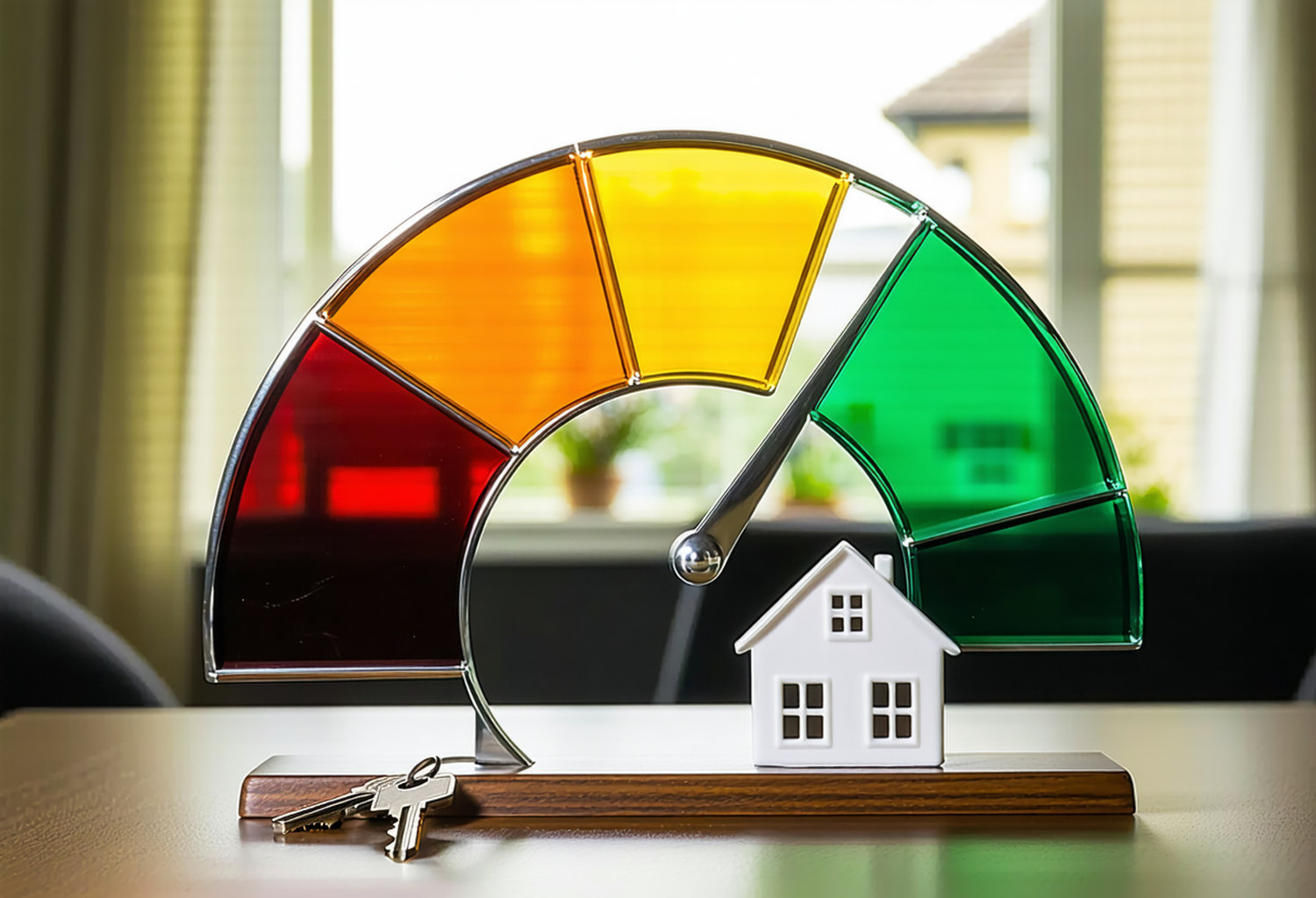
Table of Content
What is CIBIL Score?
A CIBIL score is a three-digit number, ranging from 300 to 900, that sums up how you have handled credit in the past. It is calculated by TransUnion CIBIL, one of India's credit bureaus, alongside others such as Experian, Equifax, and CRIF High Mark. The higher your score, the more confident a lender feels about your ability to repay, and the CIBIL score for housing loan applications works in exactly the same way as it does for any other borrowing.
What is a Good CIBIL Score for a Home Loan?
If you are asking what CIBIL score is good for home loan approval, most lenders treat a score of 750 and above as excellent, which usually means the smoothest approval and the most favourable interest rates. That said, 750 is not an entry gate. Many lenders, Sammaan Capital included, consider home loan applicants with a CIBIL score of around 675 and above, so you do not need a perfect score to apply.
As a rough rule of thumb, here is how lenders tend to view the main score bands, keeping in mind that your overall profile matters just as much:
| CIBIL Score | How it Helps |
|---|---|
| 750 and above | This is considered excellent and usually earns you the easiest approval and the most competitive interest rates. |
| 700 to 749 | A good score at which approval is generally straightforward for a strong application. |
| 675 to 699 | A fair score where a home loan is very much possible, especially when your income and repayment record are steady. |
| Below 675 | Approval is harder here, but a home loan for a low CIBIL score may still be within reach with a strong profile or a co-applicant. |
So the CIBIL score required for home loan approval is best thought of as a practical threshold of around 675 rather than a strict cut-off at 750.
How a Healthy Credit Score Works in Your Favour?
A strong score does more than get you through the door. It can improve your chances of approval, help you qualify for a larger loan amount, and, importantly, earn you a lower home loan interest rate that saves a meaningful sum over a long tenure. A higher score can also speed up processing, since it gives the lender quick confidence in your repayment record. Sammaan Capital, an RBI-regulated housing finance company, offers home loans on a floating rate from 8.75%* p.a., with your profile and score among the factors that shape the rate you are offered.
Can I Get a Home Loan With a Low CIBIL Score?
A lower score is not an automatic rejection, and a home loan for low CIBIL score applicants is more achievable than many people assume. When it comes to CIBIL for home loan eligibility, lenders look at the whole picture, not just the number, so there are practical ways to strengthen a modest score. A steady and sufficient income reassures the lender about repayment, a larger down payment reduces the amount you need to borrow, and adding an earning co-applicant such as a spouse or parent can lift your eligibility. The goal is to show that, whatever your score says today, you can comfortably manage the EMI.
How to Check CIBIL Score and Improve it?
You can check your CIBIL score for free on the CIBIL website, and your Experian, Equifax, and CRIF High Mark scores through the respective bureaus, usually with just your PAN and a few personal details. Many banking and finance apps show it too. Checking your own score counts as a soft inquiry and does not lower it, so it is worth doing well before you apply.
If your credit score needs improvement, a few steady habits lift it over time:
- Pay on time, every time: Your payment history carries the most weight, so clearing EMIs, card bills, and other dues by their due dates is the single most effective habit.
- Keep your credit utilisation low: Using less than about 30% of your available credit card limit signals that you are not over-reliant on credit.
- Go easy on new applications: Each loan or card application triggers a hard inquiry that can dip your score, so space them out and apply only when you genuinely need to.
- Maintain a healthy mix: Managing a sensible blend of credit types responsibly over time reflects well on your profile.
- Check your report for errors: Mistakes do happen, and getting an incorrect entry corrected can give your score a quick and deserved lift.
Home Loan Eligibility Beyond Credit Scores
A good CIBIL score opens doors, but a lower one rarely closes them for good. Know where your score stands, build the steady habits that improve it, and remember that your income, your down payment, and a co-applicant all count alongside the number. With a little preparation, the home loan you are aiming for is more within reach than a single score might suggest.
Frequently Asked Questions
What is the minimum CIBIL score for a home loan and how can I check it?
Most lenders look for a minimum CIBIL score required for home loan is around 675, though some consider lower scores when the overall profile is strong. You can check your score for free on the CIBIL website, or your scores from Experian, Equifax, and CRIF High Mark through those bureaus, usually using your PAN and a few basic details, and many banking apps display it as well.
What happens if I miss a home loan EMI and how does it affect my credit score?
A missed EMI is reported to the credit bureaus and can lower your CIBIL score, and the longer a payment stays overdue, the greater the impact. You may also be charged penal interest or late-payment fees. If you expect to miss a payment, it is best to speak to your lender early, since a single lapse that is resolved quickly does far less damage than a pattern of late payments.
Can I get a home loan with a low CIBIL score?
Yes, it is often possible. Lenders weigh your income, employment, down payment, and co-applicant alongside your score, so a strong overall profile can offset a modest number. A larger down payment or an earning co-applicant can make a noticeable difference.
Does checking my own CIBIL score reduce it?
No. Checking your own score is treated as a soft inquiry and has no effect on it. Only hard inquiries, which happen when a lender checks your credit after you apply for a loan or card, can cause a small, temporary dip.
Share This Article


Explore Popular Blogs
Explore Other Categories

A-34, 2nd & 3rd Floor, Lajpat Nagar - II, New Delhi - 110024



100% safe and secure


Our Dedicated Support



100% safe and secure